
TPMS, Valves, Lug Nuts & Wheels: A Tire Parts Guide
Published 19 May 2026 · Atika Auto Parts
When most people think about new tires, they picture the rubber and the tread — but a safe, smooth ride depends on a whole little system of parts working together. Understanding TPMS sensors, valve stems, wheel weights and lug-nut torque helps you ask the right questions and spot problems early, whether you drive the 401 to work in Mississauga or run errands around Brampton. At Atika Auto Parts here in the GTA West, we fit these parts every day, so here is a friendly, jargon-free walk-through of how it all fits together.
What TPMS Sensors Actually Do
TPMS stands for Tire Pressure Monitoring System. It is the reason that little horseshoe-shaped warning light appears on your dash when a tire is low. On most vehicles built for the Canadian market in the last decade or so, small battery-powered sensors live inside each wheel and report air pressure to your car’s computer.
- Direct TPMS uses a physical sensor in each wheel, often built into the valve stem. It is accurate but the sensors have a built-in battery that eventually wears out.
- Indirect TPMS estimates pressure using the wheel-speed sensors from your ABS, so there is no separate sensor to replace.
If your TPMS light comes on during an Ontario cold snap, do not panic — air contracts as the temperature drops, so a chilly morning can trigger it. Top up to the pressure listed on the sticker inside your driver’s door, and if the light stays on, have it checked. When we mount brand-new tires, we take care to protect or service your TPMS sensors so the system keeps working as it should.
Valves and Valve Stems: Small Part, Big Job
The valve stem is the little nozzle you unscrew to add air. It is easy to overlook, but it is the only thing sealing the air inside your tire. Rubber valve stems dry out and crack over the years, especially after Ontario’s freeze-and-thaw winters and road salt.
- Rubber snap-in valves are common on vehicles without direct TPMS — inexpensive and worth replacing whenever you change tires.
- Metal valve stems are usually part of a TPMS sensor assembly and need correct service kits (seals, grommets and a valve core) at each tire change.
- Always keep the little valve cap on. It keeps grit and moisture out of the valve core, which prevents slow leaks.
A cracked valve stem can let air out gradually, leading to that frustrating “why is one tire always low?” feeling. Replacing valves and service kits at fitting time is cheap insurance.
Wheel Weights and Balancing
No tire and wheel combination is perfectly even, so we add small wheel weights to balance the assembly. Balancing matters more than people realize, because an out-of-balance wheel spinning at highway speed on the 407 creates vibration you can feel in the steering wheel or seat.
- Clip-on weights attach to the edge of the rim — common on steel wheels.
- Stick-on (adhesive) weights hide on the inside of alloy wheels for a cleaner look.
Signs your wheels may need re-balancing include a steering-wheel shimmy at certain speeds, uneven tread wear, or vibration that comes and goes. We balance every set of tires we fit, and a quick re-balance after hitting a nasty pothole is always a smart move on GTA roads.
Rims, Wheels and Lug Nuts
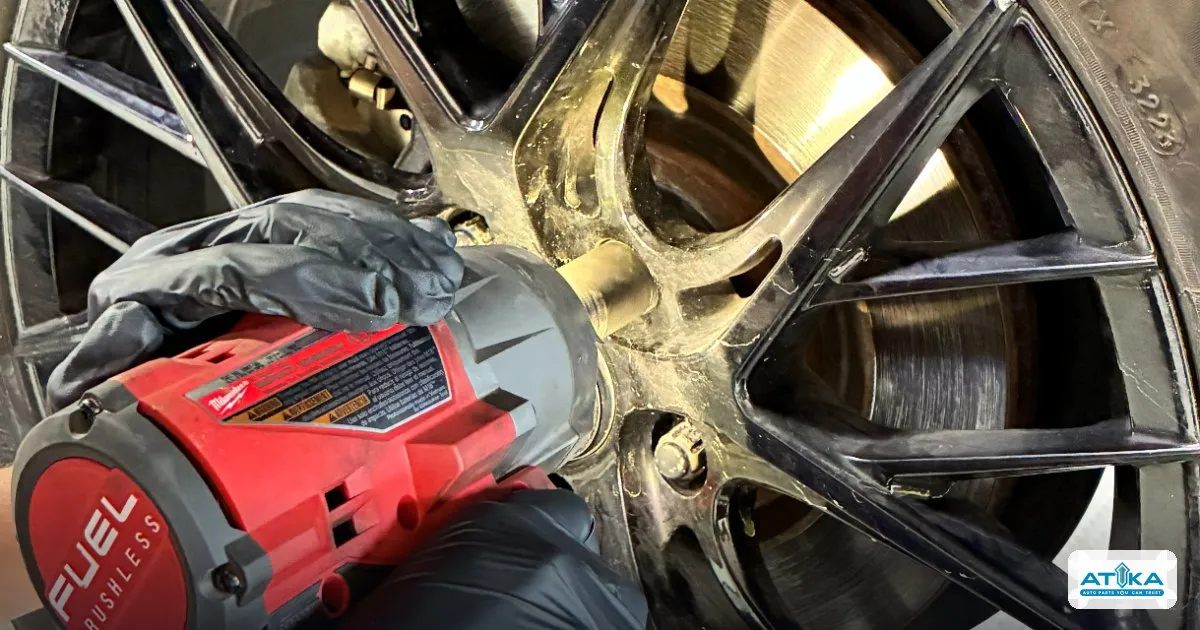
The wheel (or rim) is the metal disc the tire mounts onto. Steel wheels are tough and budget-friendly — great as a dedicated set for winter tires — while alloy wheels are lighter and look sharper. Whichever you run, the wheel is held on by lug nuts, and how they are tightened genuinely matters for safety.
- Torque, not muscle. Lug nuts should be tightened to your vehicle’s specified torque with a torque wrench — not just cranked down hard.
- Star pattern. Tightening in a criss-cross sequence seats the wheel evenly against the hub.
- Re-torque check. After new tires or a seasonal swap, it is good practice to have the lug nuts re-checked after roughly 80 to 100 kilometres of driving.
Over-tightening can warp brake rotors or stretch studs; under-tightening risks a wheel working loose. This is exactly the kind of detail our tire fitting service gets right every time.
How It All Works Together
Picture the system as a chain: the wheel carries the tire, the valve stem seals the air, the TPMS sensor watches the pressure, the wheel weights keep it smooth, and the lug nuts hold everything to the car at the correct torque. If any one part is neglected, you feel it — a vibration, a slow leak, a warning light, or uneven wear that shortens tire life.
Looking after these parts is part of routine care. For more on stretching the life of your rubber, read our tire maintenance guide, and if you are shopping for a fresh set, our guide to buying new tires in Ontario walks you through it step by step.
Book Expert Tire Fitting in Brampton
Whether you need TPMS service, new valve stems, a wheel balance or a full set of brand-new tires fitted with honest prices and same-day care, the team at Atika Auto Parts is here to help drivers across Brampton, Mississauga, Caledon, Halton and Vaughan. Call us at +1 (204) 962-8513 or visit us at 80 Hale Rd, Unit 3, Brampton, ON L6W 3M1. You can also browse our tires online or contact us to book your fitting today.