
Fuel-Efficient Tires: Save Gas With the Right Tires
Published 06 Jul 2026 · Atika Auto Parts
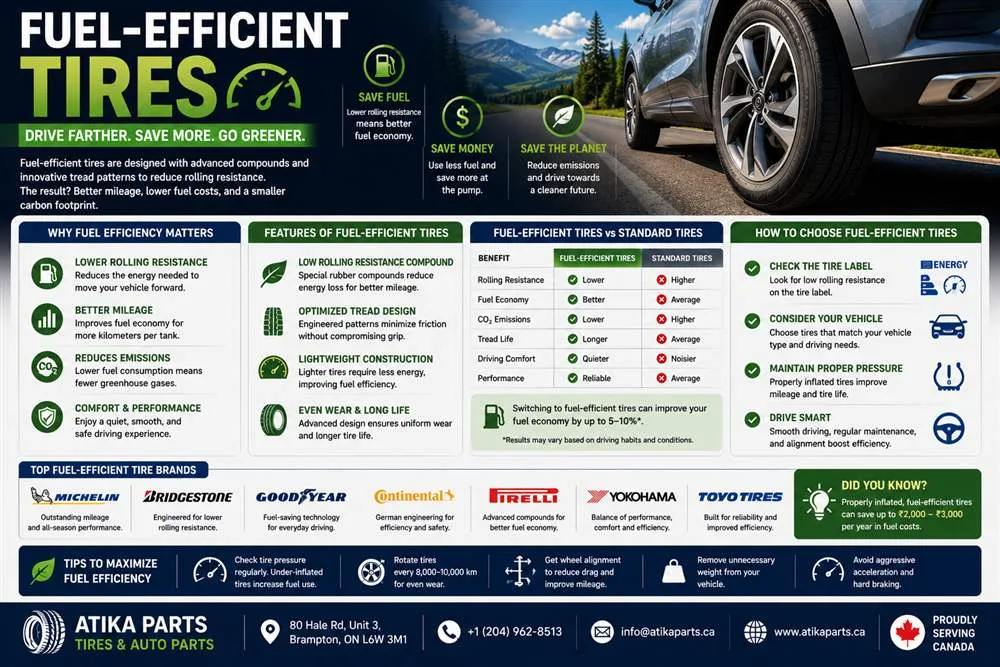
With fuel prices being what they are across Brampton and the wider GTA West, plenty of drivers ask us whether fuel-efficient tires are worth it. The short answer is yes — the right tires, kept in good shape, genuinely trim what you spend at the pump. Here at Atika Auto Parts we fit brand-new tires every day for drivers commuting on the 401 and 407, so here is an honest look at how tires affect fuel economy and what you can actually do about it.
How Your Tires Burn Fuel
Every tire fights the road a little. That resistance — called rolling resistance — is the energy your engine spends flexing the rubber and pushing the tire forward. Industry estimates put rolling resistance at roughly a fifth to a quarter of a typical vehicle's fuel use. That means the tires under your car have a real, ongoing effect on your mileage, not just on the day you buy them.
Four things drive how thirsty your tires make your vehicle:
- Rolling resistance: the tire's built-in drag, set by its rubber compound and construction.
- Tire pressure: under-inflated tires flex more and drag harder.
- Tread type & depth: aggressive, chunky tread grips well but costs fuel.
- Weight & size: heavier, wider tires take more energy to spin up and keep moving.
Low Rolling Resistance Tires Explained
Tires marketed as "low rolling resistance" (sometimes labelled LRR or "eco") use special rubber compounds and lighter internal construction to reduce that drag. Many quality all-season tires are engineered with fuel savings in mind, which suits year-round GTA West driving nicely.
Realistically, moving to a genuinely fuel-efficient set can improve fuel economy by a small but steady margin — a few percent over the life of the tires. It is not a dramatic overnight change, but across thousands of kilometres on your Brampton-to-Mississauga commute it adds up.
There is a trade-off to be honest about: some low rolling resistance designs prioritise efficiency, so grip in heavy rain or on snow may differ from a dedicated performance or winter tire. Safety comes first — through an Ontario winter you still want proper cold-weather rubber. The goal is balance, and that is exactly what we help you find in the shop.
Tire Pressure: The Free Fuel Saver
If you do only one thing after reading this, check your pressures. Under-inflation is the single most common reason we see people quietly wasting fuel. Soft tires flex more, generate heat, wear unevenly and force your engine to work harder every kilometre.
- Check pressure at least monthly and before any long highway trip.
- Always check when tires are cold — before driving, not after.
- Use the number on the driver's door sticker, not the max printed on the tire.
- Remember Ontario's temperature swings: pressure drops roughly 1 PSI for every 5°C the air cools, so autumn and winter deserve extra attention.
For the full walkthrough, see our tire pressure guide for Ontario. It is genuinely the cheapest way to protect both your fuel bill and your safety.
Tread, Weight and the Right Tire for the Job
Tread pattern matters more than most drivers expect. Deep, blocky, off-road-style tread on a vehicle that mostly sees pavement around Caledon or Halton is fuel you are paying for and not using. If your driving is largely highway and city, a smoother, road-focused tread will roll easier.
Weight counts too. Larger-diameter wheels and wide tires look sharp, but the extra rotating mass asks more of your engine. When you are choosing a size, it is worth thinking about efficiency alongside looks — and if you are unsure how to read the numbers on your sidewall, our team is happy to explain them at the counter.
The practical takeaway: match the tire to how you actually drive. A commuter crossing Vaughan every day has different needs than someone towing on gravel. Good value brands like HAIDA give us plenty of options to fit the right tread and size to your real-world driving without overspending.
Tire Care Habits That Save Fuel
Fuel-efficient tires only stay efficient if you look after them. A few simple habits make a real difference:
- Rotate on schedule so tread wears evenly and rolls smoothly.
- Keep your wheels aligned — a car that pulls or scrubs sideways drags and burns extra fuel.
- Balance your wheels to avoid vibration that wears rubber early.
- Don't run bald tires — worn tread is unsafe on wet Ontario roads and often hides deeper problems.
- Watch your load — carrying dead weight in the trunk works your tires and engine harder.
For the full routine, our tire maintenance guide lays out what to do and when. Looking after your tires is the most reliable fuel-saving move there is, and it keeps you safer on the highway too.
Save Fuel & Drive Safe — Visit Atika Auto Parts in Brampton
Want fuel-efficient tires fitted the same day, at honest prices, by people who will give you straight advice? Come see us. We serve Brampton, Mississauga, Caledon, Halton and Vaughan across GTA West with brand-new tires and expert fitting. Call +1 (204) 962-8513 or drop by 80 Hale Rd, Unit 3, Brampton, ON L6W 3M1. Browse our full tire range or get in touch and we will help you find the right set for your driving and your budget.