
Hydroplaning: How to Drive Safely in Ontario Rain
Published 06 Jul 2026 · Atika Auto Parts
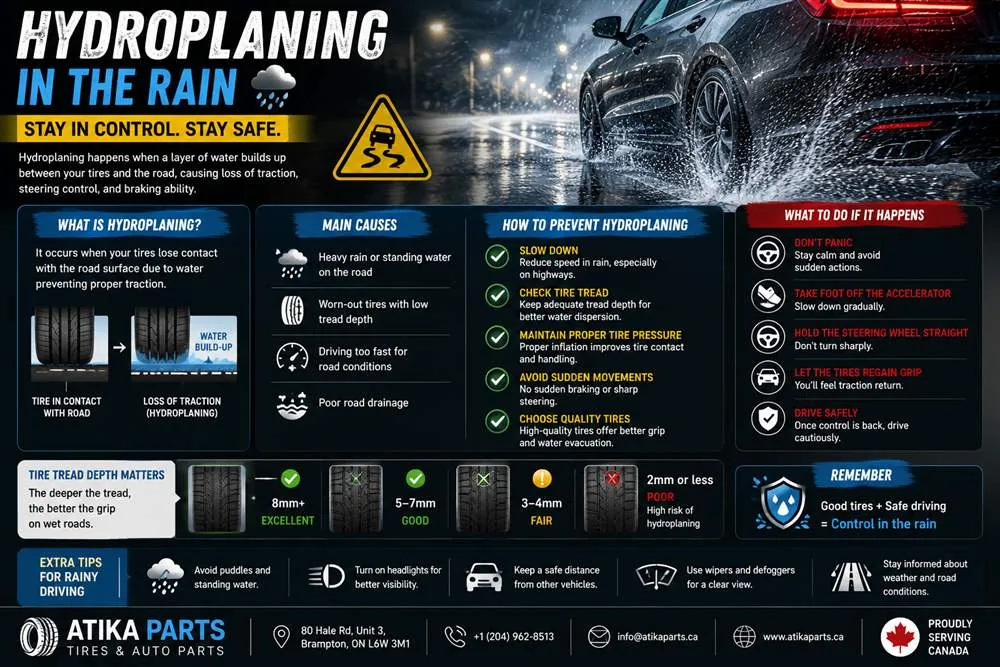
Few things feel more unsettling than a sudden loss of grip when your car glides across a puddle at highway speed. That sensation is hydroplaning, and it is one of the most common wet-weather hazards drivers face across Brampton and the wider GTA West. With frequent spring showers, summer downpours and standing water on stretches of the 401 and 407, knowing how to prevent it — and how your tires protect you — is essential for staying safe on Ontario roads.
What Is Hydroplaning, Exactly?
Hydroplaning happens when a layer of water builds up between your tires and the road faster than the tread can push it away. When that film of water lifts the tire off the pavement, you lose traction, steering response and braking ability — all at once. Even a brief moment of hydroplaning can feel like the car is floating or drifting sideways.
Several factors make it more likely:
- Speed — the faster you drive, the less time the tread has to channel water away.
- Water depth — puddles, poorly drained lanes and heavy rain all raise the risk.
- Tire condition — worn tread and low pressure dramatically reduce a tire's ability to grip in the wet.
How Tread Depth Keeps You on the Road
The grooves in your tires are not just for looks — they are designed to evacuate water so the rubber can stay in contact with the pavement. As tread wears down, those channels shrink and can move far less water, which is exactly when hydroplaning becomes a serious threat.
In Ontario, the legal minimum tread depth is 1.6 mm, but wet-weather grip starts to fade well before that. A quick way to check at home is the toonie test: insert a toonie into the tread groove. If the tread reaches the bear's paws, you have plenty left; if it only reaches the silver ring, your tires are getting worn and it is time to plan a replacement. To understand tread life and replacement timing in more detail, see our guide on how long tires last in Ontario.
Why Tire Pressure Matters in the Rain
Correct inflation is just as important as tread. An under-inflated tire flexes and distorts, which changes how the tread contacts the road and reduces its ability to clear water. Over-inflation shrinks the contact patch and makes the tire more prone to skimming across the surface.
- Check your pressure at least once a month and before long trips — cool temperatures in a Brampton morning can quietly drop your pressure.
- Use the manufacturer's recommended pressure, found on the sticker inside your driver's door jamb, not the maximum stamped on the tire.
- Remember that a well-maintained, correctly sized brand-new tire will always outperform a worn one when the roads are wet.
If you are unsure how to match tire size to your vehicle, our post on reading tire size walks you through every number and letter on the sidewall.
Safe-Driving Tips for Wet Ontario Roads
Good tires give you the margin, but smart driving keeps you inside it. When rain moves across the GTA West, keep these habits in mind:
- Slow down. Reducing speed is the single most effective way to prevent hydroplaning. Give yourself more time and following distance.
- Avoid puddles and standing water where it is safe to do so — the outside lanes and dips near highway on-ramps often pool water.
- Turn off cruise control. On wet highways like the 401 and 407, cruise control can keep power applied at the wrong moment and make a hydroplaning event harder to recover from.
- Steer and brake gently. Sudden inputs break traction. Smooth, deliberate movements help the tire keep its grip.
- If you start to hydroplane, ease off the accelerator, keep the wheel steady, and let the tires reconnect with the road — avoid slamming the brakes.
The first rainfall after a dry spell is especially slick, as oil and grime rise to the surface. A little extra caution goes a long way from Mississauga to Caledon to Vaughan.
When Worn Tires Become Dangerous on the 401 and 407
Highway speed and heavy rain are the worst combination for tired-out tires. On the 401 and 407, drivers cover ground quickly, water pools in ruts, and there is little room for error. Tires that are visibly worn, cracked, unevenly worn or past their prime simply cannot move enough water to keep you safe at those speeds.
Warning signs it is time to act:
- Shallow or uneven tread, or tread wear bars becoming flush with the surface.
- The car feeling loose, wandering or "floaty" during rain.
- Longer stopping distances or reduced grip on wet corners.
Before any rainy commute, it is worth running through a quick vehicle safety checklist so nothing catches you off guard. If your tires no longer inspire confidence in the wet, replacing them with fresh, correctly rated rubber is one of the most valuable safety upgrades you can make.
Ready for Rainy-Day Confidence? Visit Atika Auto Parts
If your tires are worn, low on tread, or you are simply not sure they can handle a GTA West downpour, we are happy to take a look and help you choose the right fit. At Atika Auto Parts we stock brand-new all-season, all-weather, winter and light-truck tires — including great-value HAIDA options — with honest advice and expert same-day fitting. Call us at +1 (204) 962-8513 or visit us at 80 Hale Rd, Unit 3, Brampton, ON L6W 3M1. Browse our full tire range or get in touch to book your fitting and drive through the rain with confidence.