
How Long Do Tires Last? Age, Mileage & Ontario Wear Guide
Published 25 May 2026 · Atika Auto Parts
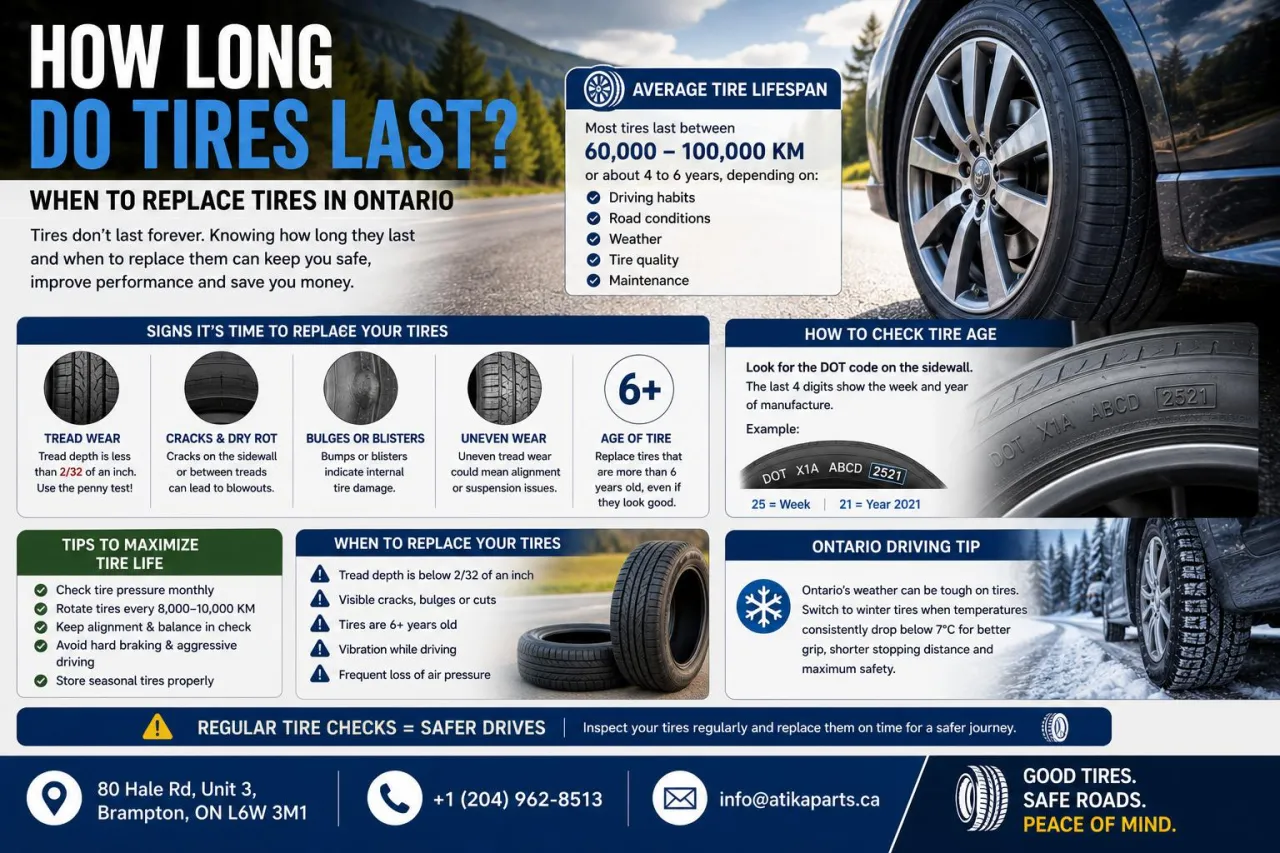
If you drive around Brampton and the wider GTA West, one of the most practical questions you can ask about your vehicle is simple: how long do tires last? The honest answer is that a tire's lifespan depends on a handful of factors — how far you drive, how well you maintain your set, the roads you cover, and our demanding Ontario climate of salted winters, spring potholes and summer heat. At Atika Auto Parts on Hale Road in Brampton, we help drivers from Mississauga, Caledon, Halton and Vaughan get honest answers every day, and in this in-depth guide we'll walk you through everything that determines tire life — and how to stretch every kilometre out of your set.
The Short Answer: Average Tire Lifespan in Years and Kilometres
Most quality passenger tires are designed to last somewhere between 60,000 and 100,000 km, which for the average Ontario driver works out to roughly five to seven years of everyday use. That's a broad range on purpose, because two identical tires can wear out at very different rates depending on the car, the driver and the roads. A commuter grinding up and down Highway 410 every day will burn through tread faster than someone running errands around Brampton on the weekend.
A few rules of thumb are worth keeping in mind:
- All-season tires commonly last five to seven years or 60,000–90,000 km depending on the compound and how they're driven.
- Winter tires typically last four to six seasons, since their softer rubber compound is built for grip rather than long tread life.
- All-weather tires tend to fall in between — they carry the winter-rated snowflake symbol but are engineered to run year-round, so their wear rate sits close to a good all-season set.
- Light-truck and SUV tires vary widely, with heavier loads and larger contact patches sometimes reducing life, though many are built with tougher, longer-wearing compounds.
Keep in mind that these numbers assume proper maintenance. Neglect the basics and you can lose tens of thousands of kilometres of usable tread. For a deeper look at real-world numbers, see our companion article on how to make your tires last longer.
Tread Depth: The Number That Actually Decides Replacement
Years and kilometres are useful estimates, but the true measure of whether a tire is done is tread depth. Tread is what channels water, slush and snow away from the contact patch so your tires can grip the road. As it wears down, stopping distances grow and the risk of hydroplaning climbs sharply.
New tires typically start with around 8–9 mm of tread. In Ontario, the legal minimum is 1.6 mm, marked by the tire's built-in wear bars — but waiting until that point is genuinely risky, especially in wet or wintry conditions. We recommend planning replacement well before then:
- Below 4 mm: start shopping and budgeting for a new set, particularly ahead of winter.
- At 3 mm: wet-weather grip drops off noticeably; replacement is strongly advised.
- At 1.6 mm: the tire is legally worn out and unsafe — do not keep driving on it.
A quick home check: insert a Canadian toonie into the tread groove. If the tread reaches the bear's paws, you have plenty left; if it only reaches the silver edge or the letters, you're getting low. Any time you're unsure, we're happy to measure it precisely for you at our Brampton shop.
The 6-and-10-Year Age Rule: Why Old Tires Are Risky
Here's a fact that surprises many drivers: tires age out even if they look barely used. Rubber is an organic compound that dries and hardens over time through a process called oxidation, whether the tire is on your car or sitting in a garage. A tire with deep tread but a decade of age can be just as dangerous as a bald one, because the aged rubber loses its flexibility and grip and becomes prone to cracking.
The widely accepted guidance is straightforward:
- Around 6 years: have your tires professionally inspected each year, regardless of how much tread remains.
- At 10 years: replace them, full stop. Most tire makers advise that no tire should stay in service beyond ten years from its date of manufacture.
This age rule matters most for low-mileage vehicles, spare tires and seasonal sets that spend half the year in storage. If you bought a "great deal" on used or old-stock tires, the age clock may already be well advanced — which is one reason we sell brand-new tires only at Atika Auto Parts.
How to Read the DOT Date Code on Your Tires
You don't have to guess a tire's age — it's stamped right on the sidewall. Look for the letters DOT followed by a series of characters, ending in a four-digit code. Those last four digits are what you want:
- The first two digits are the week of manufacture (01 through 52).
- The last two digits are the year.
For example, a code ending in 2523 means the tire was built in the 25th week of 2023 — roughly mid-June 2023. Sometimes the full DOT code is only fully stamped on one side of the tire, so if you can't find the four-digit date on the outward-facing sidewall, check the inner side. Knowing this code lets you verify the age of any tire before you buy and track when your current set is approaching that six- and ten-year window. Learning to decode the sidewall pays off in other ways too — our guide on how to read your tire size covers the rest of those markings.
Every Factor That Affects How Long Your Tires Last
Tire life isn't decided by a single thing — it's the sum of many. Here are the factors that matter most, and what you can do about each.
Tire pressure. This is the single biggest lever most drivers ignore. Underinflated tires flex too much, run hot and wear out their outer edges; overinflated tires wear the centre and ride harshly. Correct pressure keeps the whole tread in even contact with the road. Check it monthly and before long trips — our Ontario tire pressure guide explains exactly how.
Wheel alignment. Even a small misalignment — often caused here by hitting a pothole — drags the tread across the road at a slight angle, shaving off rubber and creating uneven, feathered wear. Alignment issues can quietly ruin a set in a matter of months.
Tire rotation. Front and rear tires wear differently because of steering, braking and (on many cars) which wheels are driven. Rotating on a regular schedule evens out that wear so all four last longer. Our article on tire rotation — why, when and how covers the recommended intervals.
Driving habits. Hard acceleration, heavy braking and fast cornering all scrub away rubber quickly. Smooth, gradual inputs can add thousands of kilometres to a set's life.
Climate and temperature. Ontario's swing from −20°C winters to +30°C summers is tough on rubber. Heat accelerates wear and pressure changes; cold stiffens compounds and drops pressure. Running the right tire for the season protects both your grip and your tread.
Load and towing. Carrying heavy loads or towing puts extra stress on tires, raising temperatures and wear. Staying within your tire's load rating matters — see our overview of speed rating and load index.
Storage. Off-season tires last longer when stored properly: clean, dry, out of direct sunlight, away from ozone-producing motors, and stacked or hung correctly. Poor storage ages rubber prematurely.
The Ontario Factor: Salt, Potholes and Seasonal Swaps
Driving in the GTA West puts a particular kind of stress on tires that drivers in milder climates never face. It's worth understanding these local realities because they directly shorten — or, if managed well, protect — your tire life.
Winter road salt. The salt and brine that keep Brampton and Mississauga roads passable in January are corrosive. While salt is harder on wheels and brake components than on the rubber itself, the grit and slush it mixes with can accelerate wear, and salty residue left on stored tires isn't ideal. Rinsing your tires and wheels after heavy-salt driving is a small habit that helps.
Potholes. Ontario's freeze-thaw cycle is a pothole factory, and every spring our roads are full of them. A hard pothole strike can knock your alignment out, bend a rim, or cause a sidewall bulge or internal damage that leads to sudden failure. If you hit a bad one, it's worth having your tires and alignment checked.
Seasonal swaps. Running dedicated winter tires in the cold months and all-seasons the rest of the year effectively doubles the life of each set, because each is only accumulating kilometres for part of the year. Winter rubber also stays supple below +7°C, where all-seasons harden and lose grip. If you're weighing your options, our comparison of all-season vs winter tires in Ontario lays out the trade-offs, and when to install winter tires covers timing.
Warning Signs It's Time for New Tires
Your tires usually tell you when they're near the end. Watch and feel for these signals, and don't ignore them:
- Worn-down tread reaching the wear bars or failing the toonie test.
- Uneven wear patterns — bald edges, a worn centre strip, or feathered, cupped or patchy wear that points to pressure, alignment or suspension issues.
- Cracks in the sidewall or tread grooves, a sign of age and dry rot.
- Bulges or blisters on the sidewall, which indicate internal damage and a real risk of blowout — replace immediately.
- Vibration through the steering wheel at speed that isn't fixed by balancing.
- Frequent pressure loss in one tire, suggesting a slow leak or damage.
- Age past ten years, regardless of how the tread looks.
If you notice any of these, bring your vehicle to our Brampton shop and we'll take a look. Catching a problem early is always cheaper and safer than dealing with a roadside failure.
How to Make Your Tires Last as Long as Possible
The good news is that most of what shortens tire life is within your control. A little routine care goes a long way toward getting the full lifespan — and the safety — out of a quality set. Here's the maintenance checklist we recommend to our GTA West customers:
- Check pressure monthly and before long drives, adjusting for temperature swings.
- Rotate every 8,000–12,000 km to even out wear across all four tires.
- Get an alignment check once a year and after any hard pothole strike or curb hit.
- Have tires balanced when installed and if you feel vibration.
- Inspect regularly for cuts, bulges, embedded objects and uneven wear.
- Store off-season tires properly — clean, dry and out of sunlight.
- Drive smoothly and avoid overloading the vehicle.
Choosing well-made tires in the first place also matters. Value brands like HAIDA — including the HAIDA Runspirit, HD668 and HD737 — deliver dependable performance at honest, fair prices, which is exactly why we stock them. If you'd like an honest take, read our HAIDA tire review for Ontario value tires.
Frequently Asked Questions
How many years do tires typically last?
Most quality passenger tires last about five to seven years with normal use and proper care. However, no tire should stay in service beyond ten years from its manufacture date, even if the tread still looks good, because aged rubber loses grip and can crack.
How many kilometres can I expect from a set of tires?
Most all-season tires are designed to last roughly 60,000 to 90,000 km, though this varies with your vehicle, driving style and road conditions. Winter tires generally last four to six seasons, since their softer compound prioritizes grip over long tread life.
How do I read the age of my tires?
Look on the sidewall for the letters DOT followed by a code ending in four digits. The first two digits are the week of manufacture and the last two are the year. For example, a code ending in 2523 means the tire was built in the 25th week of 2023.
Does Ontario winter salt damage tires?
Road salt is harder on wheels and brake parts than on the rubber itself, but the grit and slush it mixes with can accelerate wear, and salty residue on stored tires is not ideal. Rinsing your tires and wheels after heavy-salt driving is a simple habit that helps.
What is the legal minimum tread depth in Ontario?
The legal minimum tread depth is 1.6 mm, marked by the wear bars built into the tire. However, we recommend replacing tires before then, especially ahead of winter, since wet and snowy grip drops off noticeably once tread falls below about 3 to 4 mm.
Can old tires be unsafe even with plenty of tread?
Yes. Rubber ages and hardens over time whether or not the tire is being used, so a low-mileage tire that is many years old can still be dangerous. Have tires inspected yearly once they reach about six years old, and replace any tire that is ten years past its manufacture date.
Ready for a Fresh, Safe Set? Talk to Atika Auto Parts
If your tires are getting on in years, wearing thin, or showing any of the warning signs above, don't wait for a roadside surprise. At Atika Auto Parts we carry brand-new tires for every season, including dependable all-season tires, cold-weather winter tires and rugged light-truck tires, all fitted with expert, same-day service at honest, fair prices. Drivers across Brampton, Mississauga, Caledon, Halton and Vaughan trust us for great value and straight answers. Call +1 (204) 962-8513, visit us at 80 Hale Rd, Unit 3, Brampton, ON L6W 3M1, or contact us today to get the right tires on your vehicle.